At a Glance
The smell of a flavorful dinner is nice while you enjoy a meal, until the smell of fried food and spices linger around longer than they’re welcome. It’s easy to disregard, but when left too long the buildup from cooking is tough to clean and can even damage your paint over time.
This guide will help you understand the technical side of choosing the right kitchen vent hoods for your specific cooking habits. Follow along as our experts break down how to calculate the power you need, compare the different ways to mount a unit, and look at the most reliable models currently available.
Shop Kitchen Vent Hoods
Keep your kitchen clean and fresh with the right kitchen vent hood to match your cooking style and kitchen size.
Save | Kitchen Vent Hood DealsThe Science of Kitchen Ventilation: CFM and BTU Explained
The most important term you should know before shopping for a kitchen range hood is CFM (Cubic Feet per Minute). This measures how much air in cubic feet a kitchen fan can filter in sixty seconds. If you have a gas range, you calculate your needs based on the total heat output of the appliance’s burners. The standard rule is 1 CFM of ventilation for every 100 BTUs of total burner power.
For example, if your stove has a total output of 60,000 BTUs, you need a hood rated for at least 600 CFM.
Since electric stovetops and induction cooktops do not produce as much ambient heat as gas models, homeowners can get away with kitchen ventilation with lower CFM ratings. In these scenarios, we usually recommend 100 CFM for every 10 linear inches of cooktop. Most standard 30-inch electric stoves perform best with a fan rated at 300 to 400 CFM. The biggest mistake we see is buyers choosing a fan that’s too small, which has a smaller capture area, affecting how much smoke, odor, and grease is filtered from the air.
Breaking Down Kitchen Vent Hood Sizes
Kitchen range hood performance is not just about the motor size. The setup matters just as much. A high-CFM unit will struggle with inefficient ductwork or when ductwork has too many sharp turns (believe it or not).
For fans over 600 CFM, we recommend using a 8-inch or 10-inch rigid metal duct. Using a 6-inch pipe on a high-power motor creates massive air turbulence. This makes the unit much louder than it needs to be and actually reduces the amount of air it can pull.
Learn More: Gas Cooktop Buyer Guide
Top Range Hood Configurations for Every Kitchen Layout
Your kitchen layout usually dictates which mounting style you need. Each version has its own set of requirements for installation and air capture.
Under-Cabinet and Wall-Mount Styles
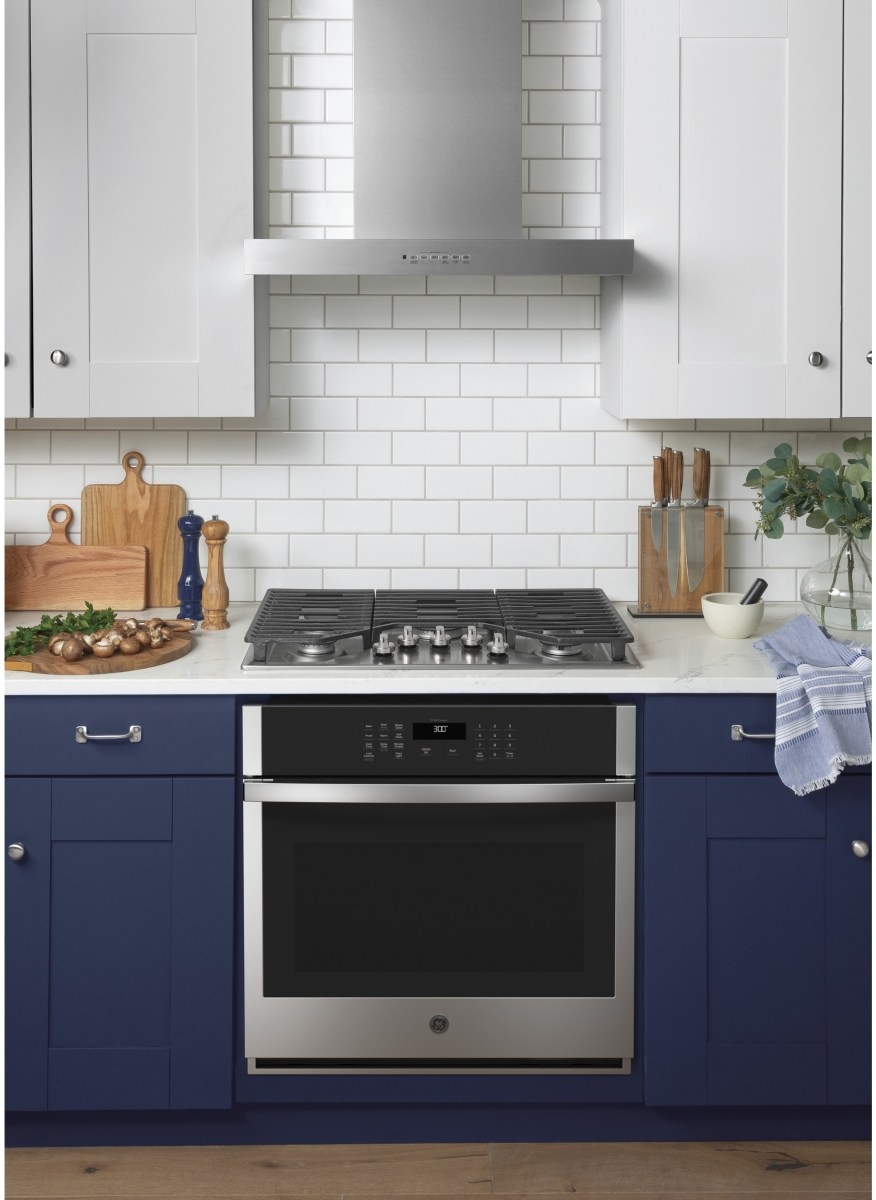
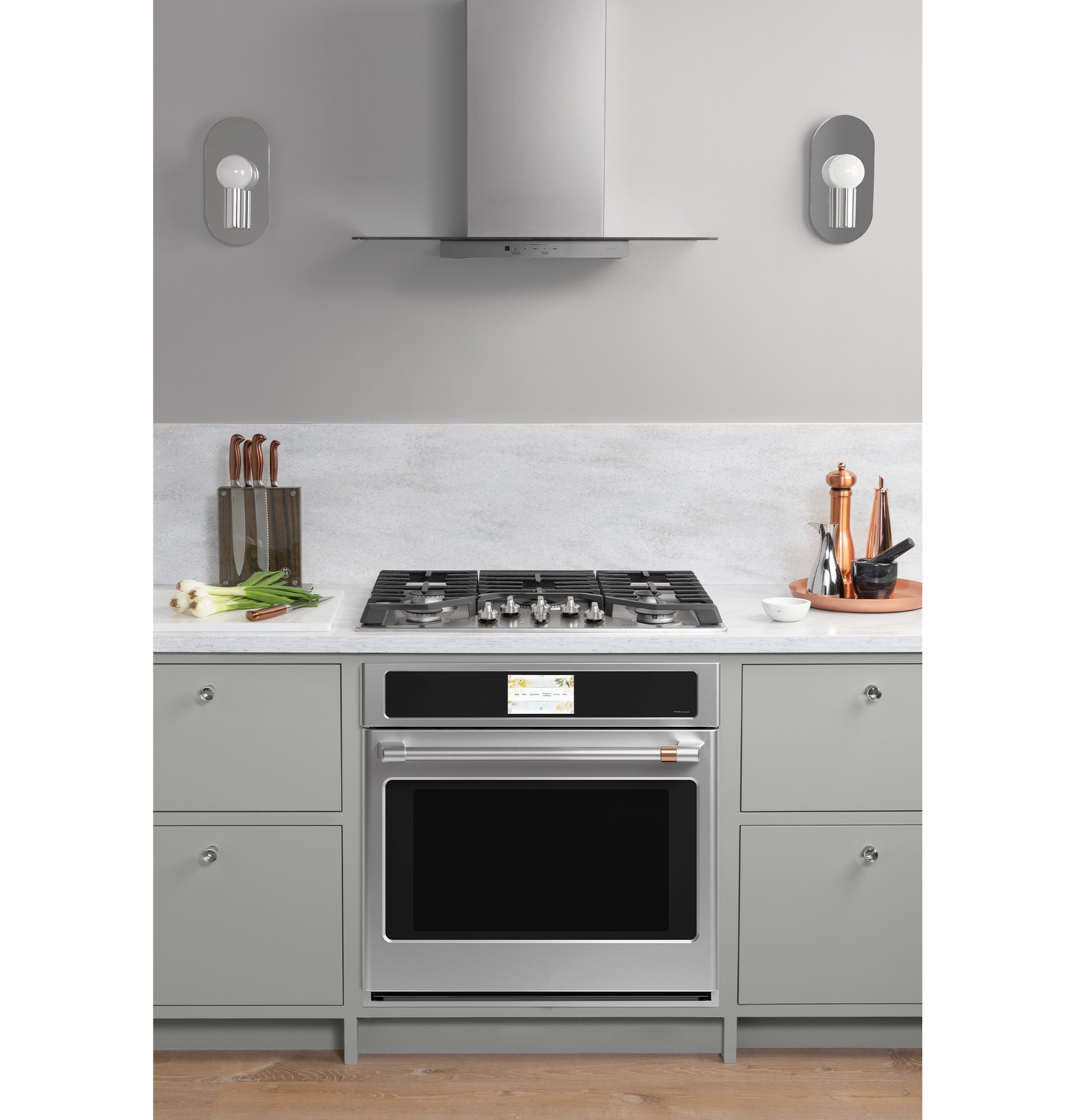
Under-cabinet range hoods are the most common choice for standard kitchens where cabinets run across the entire cooking wall. These are great for saving space because you can still use the cabinet above the hood for small items or spices. Wall-mount canopy hoods, on the other hand, replace the cabinet entirely. They look like a chimney and act as a bold visual center for the room. These are excellent for heavy cooking because the large canopy shape helps trap smoke before the fan even starts to pull it.
Island and Insert Options
If your stove is installed in an island, an island range hood is the way to go. These are finished on all four sides since they hang in the middle of the room. They generally need to be more powerful because they do not have a back wall to help funnel the air upward.
If a completely hidden look is your goal, insert range hoods are the answer. These fit inside custom-built wood or stone covers, giving you pro-level power without changing the look of your cabinetry.
Comparing Range Hood Mounting Styles
| Vent Type | Best For (Layout) | Installation Difficulty | Primary Benefit |
|---|---|---|---|
| Under-Cabinet | Traditional layouts | Low | Saves cabinet storage space |
| Wall-Mount | Open wall space | Medium | Strong air capture and style |
| Island-Mount | Kitchen islands | High | Provides 360-degree finishing |
| Insert / Built-In | Custom cabinetry | High | Hidden, seamless appearance |
Ducted vs. Ductless: Which Ventilation Method is Right for You?
Beyond the type of range hood, power ratings, and size, another important factor to keep in mind is a ducted vs ductless kitchen vent fan.
A ducted system uses metal piping to carry smoke, heat, and moisture to an exterior vent. This is the gold standard for anyone who does a lot of searing, frying, or boiling. Because it removes the actual air, it also removes the humidity that can make a kitchen feel like a sauna. We always suggest going ducted if your home allows for it, since it’s the only way to truly improve kitchen air quality during heavy sessions.
If you live in an apartment or a home where you cannot cut a hole in the exterior wall, a ductless range hood (also knowns as a recirculating system) is your alternative. These units pull air through a grease filter and then through activated carbon filters to neutralize odors, and the conditioned air is then pushed back into the kitchen.
While these are great at catching grease, they do nothing to remove heat or moisture. You will also need to stay on top of maintenance. Charcoal filters cannot be cleaned and must be replaced every three to six months to stay effective.
Long-term care differs greatly between the two. In a ducted setup, you mostly focus on cleaning the metal grease filters. Over several years, you might want to have the external ductwork professionally cleaned to prevent grease buildup. For ductless units, the cost of replacement filters adds up over time. However, the installation is much cheaper and faster since you do not have to hire a contractor to run pipes through your ceiling or walls.
Learn More: Best Gas Range with Convection
Installation Essentials: Size, Clearance, and Ductwork
A common mistake homeowners make is buying a kitchen hood that is the exact same width as their stove. While this works, we highly recommend the 6-inch rule.
Ideally, your hood should be 3 inches wider than your cooktop on each side. If you have a 30-inch range, a 36-inch hood provides a much larger capture zone. This helps catch the smoke that naturally billows out to the sides before the fan can suck it up. It makes a massive difference if you use the front burners frequently.
Clearance is also a safety matter. Most manufacturers recommend hanging a range hood 24 to 30 inches above the cooking surface. When installed too high, the fan is unable to pull the air effectively. When hung too low, it can become a fire hazard, especially over a gas flame. It also gets in the way of your sightlines while you are trying to see into your pots. That’s why it’s always important to check the manual for your specific model to find the exact sweet spot for height.
When it comes to the pipes, always choose smooth, rigid metal ducting. Flexible transition ducts—those crinkly foil tubes—are popular because they are easy to install, but they are terrible for airflow. The ridges inside create friction, which slows down the air and traps grease. This buildup is a fire risk. Rigid ducting stays cleaner and allows the air to move silently. We always suggest professional range hood installation to make sure the exterior wall cap is sealed correctly and the electrical is up to code.
Essential Features to Look for in a Modern Range Hood
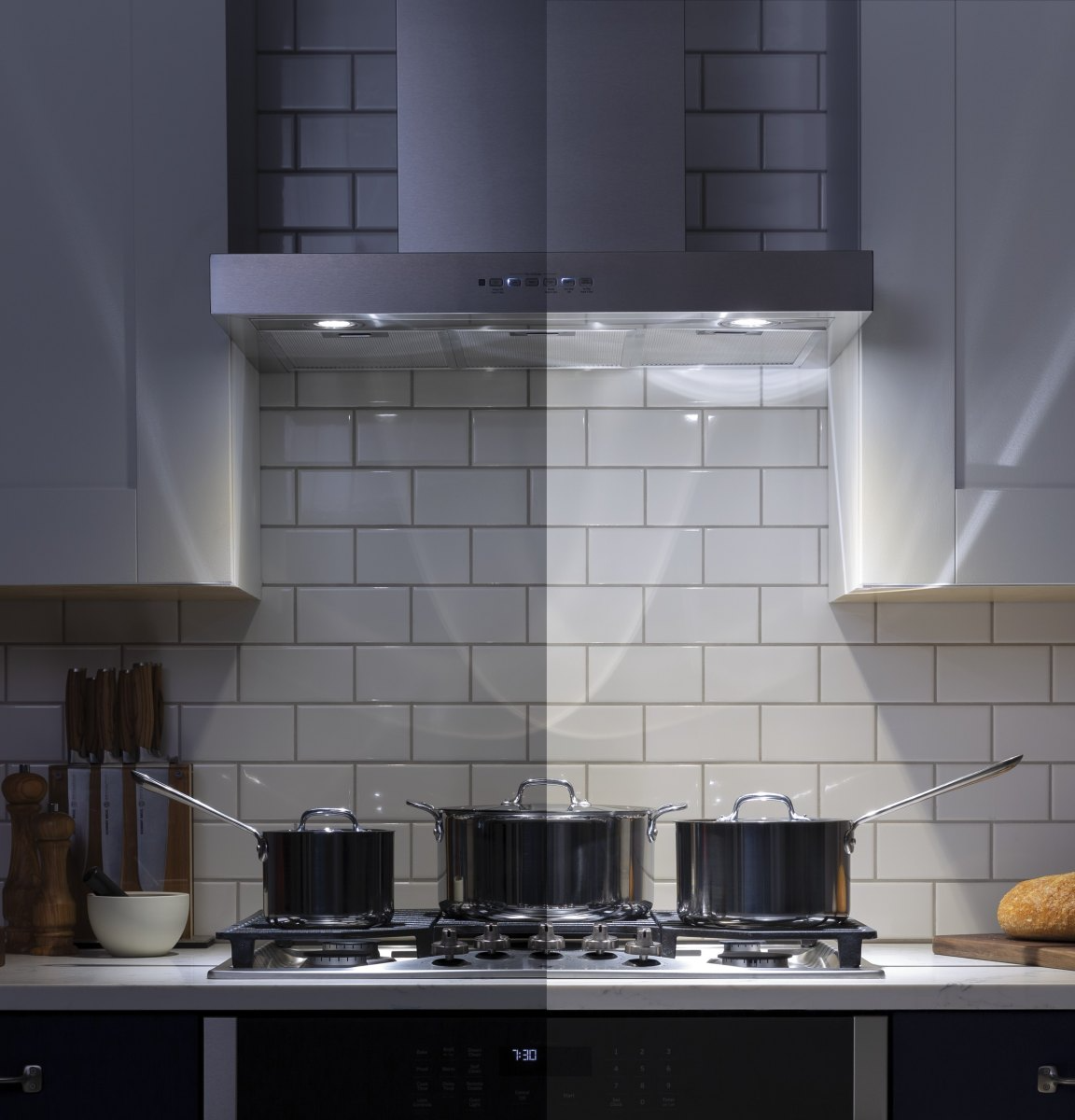
Noise is the biggest complaint people have about their kitchen ventilation. In open-concept homes, a loud fan can ruin the vibe of a dinner party. Ensure you get a quiet range hood by learning how to read sones ratings.
- One sone: is roughly the sound of a quiet refrigerator.
- A rating of three to five sones: is standard for high speed, but the best units offer a quiet/sleep mode that runs at less than one sone. This is perfect for simmering a sauce for hours without the background hum.
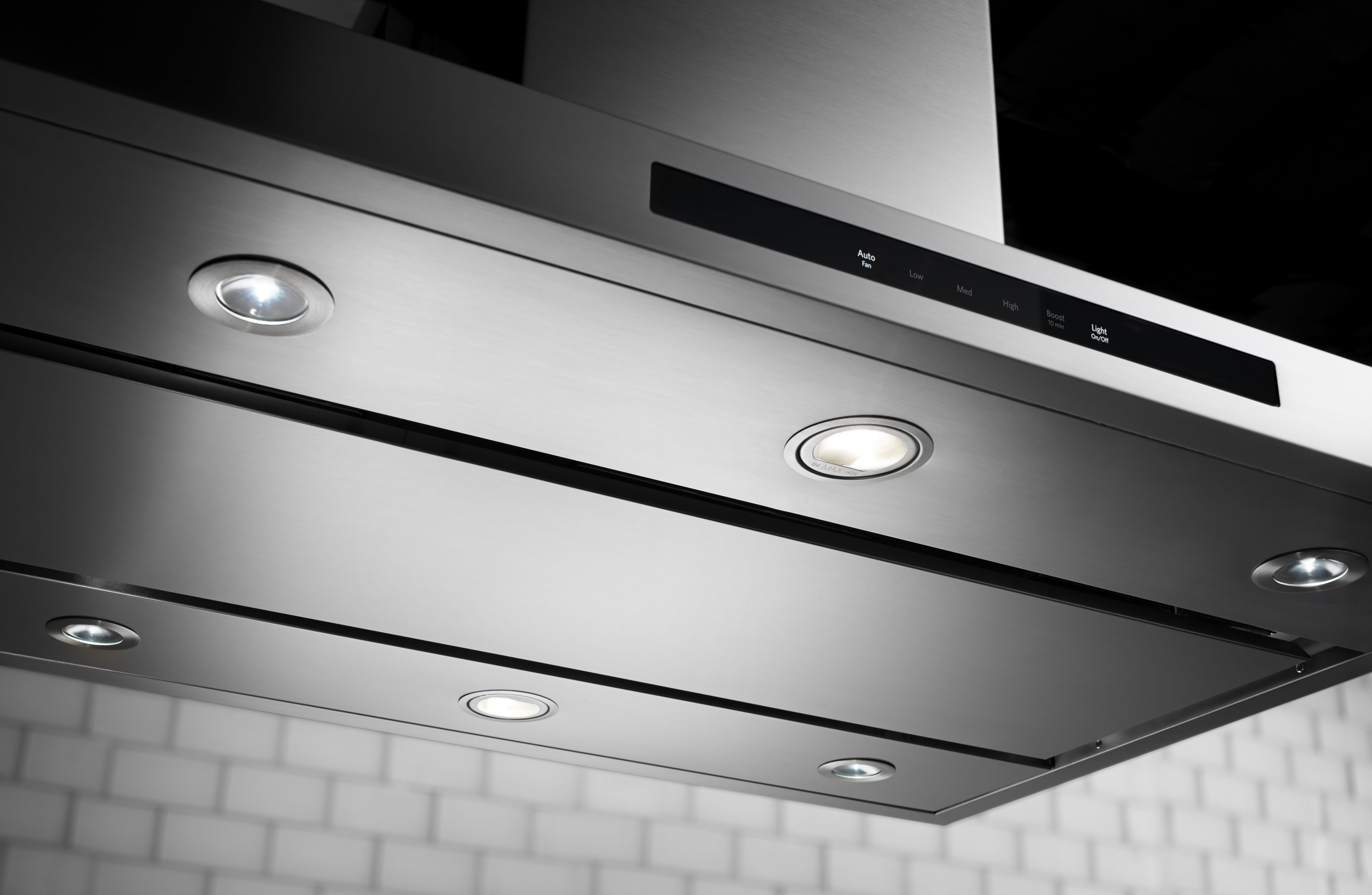
And don’t forget about overhead lighting! Good kitchen vent hoods should act as a primary task light for your stove. LED lights are the current standard because they stay cool to the touch and last for years. Some higher-end models even offer adjustable color temperatures so you can match the light to the rest of your kitchen. Look for units that have the lights at the front, as this prevents you from casting a shadow over your food while you are standing at the stove.
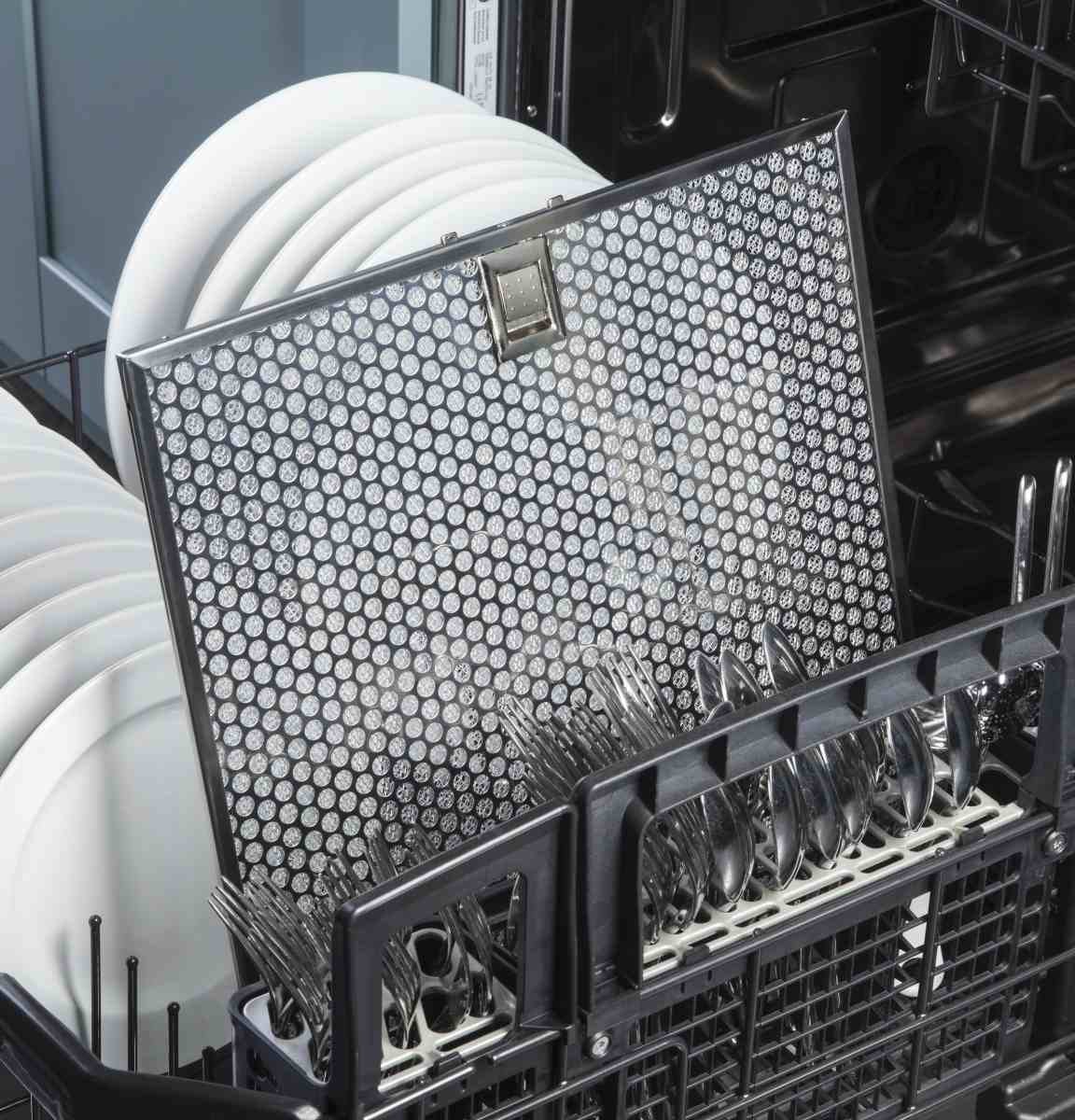
Finally, consider the filters. Mesh filters are made of several layers of aluminum screen. They are affordable but can be hard to get completely clean once grease gets deep inside. Baffle filters are the professional choice. They are made of stainless steel plates that force the air to change direction quickly. The grease traps on the metal while the air moves through. These are extremely durable and usually dishwasher-safe, which makes your weekend cleaning routine much easier.
Top-Rated Ventilation Solutions for Your Home
Selecting a ventilation system requires matching the power of your stove to the airflow of the fan. We carry a variety of brands that blend high-end design with the brute force needed to clear out heavy smoke. These top picks represent the most reliable solutions we offer for local homeowners.
GE Profile™ 30" Stainless Steel Under Cabinet Range Hood

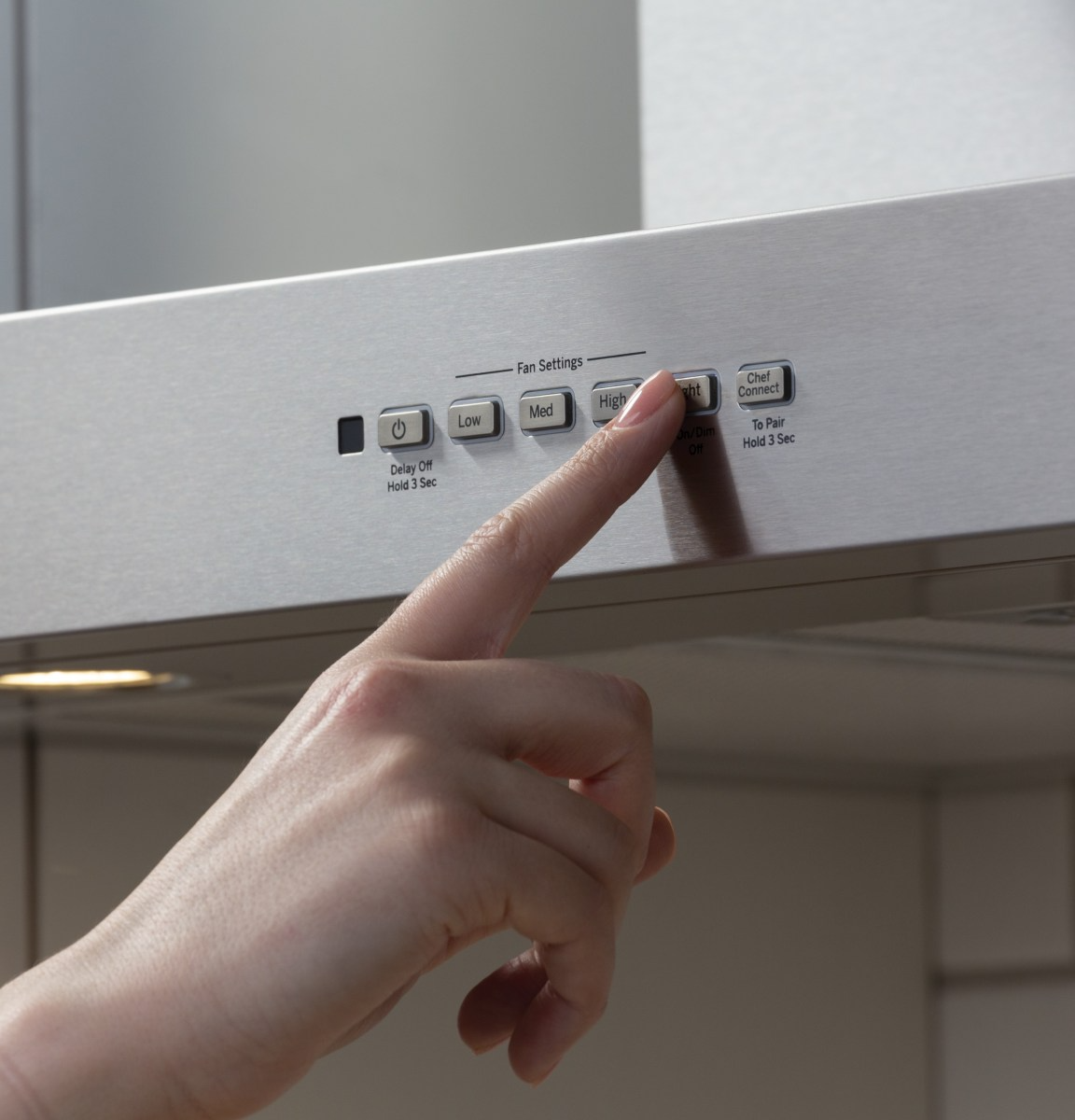
This sleek under-cabinet model is perfect for homeowners who want professional power without a bulky look. It features a powerful 390 CFM fan that can handle most cooking tasks with ease. The LED lighting provides bright, clear visibility over the entire cooking surface. We love the easy-to-use glass touch controls that wipe clean in seconds, preventing grease from gumming up buttons. It offers a very low profile that fits under standard cabinetry, making it an excellent choice for a quick kitchen refresh.
⭐Featured GE Profile PVX7300SJSS Review:
"Very good exhaust capability, quiet, good lighting, sleek appearance."
Café™ 36" Stainless Steel Wall Mount Glass Canopy Chimney Hood
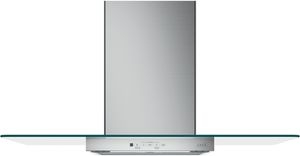
Beautifully crafted with a glass canopy for a touch of visual interest, this Cafe range hood is a stunning looker ideal for everyday cooking. It features a 350-CFM rating (standard) along with dual halogen lighting for a fully thought-out setup to keep up with your cooking. Choose from four fan settings and enjoy low maintenance with a dishwasher-safe filter.
⭐Featured Cafe CVW73612MSS Review:
"I'm overall very pleased with this purchase. Value, Look, and Function have all meet my expectations."
GE® 30" Stainless Steel Wall Mounted Range Hood
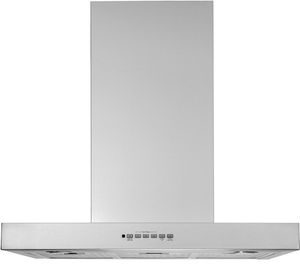
This chimney-style hood offers a modern, clean look that works in almost any contemporary kitchen. With a 350 CFM motor, it provides the right amount of suction for daily family meals and light frying. The backlit electronic controls are easy to see and operate, even in a dark kitchen. It is designed for easy installation and can be used in either ducted or recirculating configurations. This versatility makes it a go-to option for homeowners who might not have external venting ready yet.
⭐Featured GE UVW8301SLSS Review:
"Easy to use, great airflow, quiet, great light, looks beautiful."
KitchenAid® 36" Stainless Steel Wall Mounted Range Hood
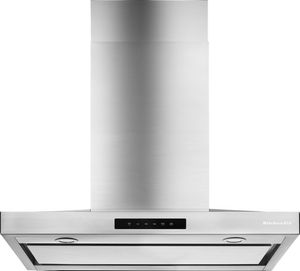
KitchenAid brings its reputation for durability to this 36-inch wall-mount unit. The KVWC736SSS features a robust 400 CFM motor, making it one of the better options for high-output gas ranges. The commercial-style baffle filters are excellent at pulling grease out of the air before it enters your ductwork. We recommend this model for people who do a lot of stir-frying or high-heat searing because the capture area is very deep. The stainless steel finish is fingerprint-resistant, keeping it looking sharp even in a busy house.
Whirlpool® 30" Stainless Steel Convertible Under Cabinet Hood
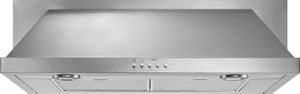
For a reliable and budget-friendly solution, this Whirlpool model is a classic choice. It is designed to be low-profile so it won't dominate the look of your kitchen, but it still packs a 400 CFM punch. This is one of the easiest ducted range hoods to install, fitting into standard 30-inch cabinet openings. It is a workhorse unit that focuses on the basics—pulling air and providing light—without a bunch of complicated features you might not need.
⭐Featured Whirlpool UXT5530AAS Review:
"Have had this unit for some years now. It works great and looks great, nice contemporary look."
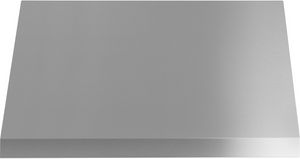
GE 30" Stainless Steel Commercial Wall Mounted Range Hood
Shop GE Wall Mounted Range Hoods
This unit is for the person who wants a pro-style look in a standard 30-inch space. It has a high-capacity 590 CFM motor that can clear the air in a large kitchen very quickly. The design mimics the heavy-duty hoods you see in restaurant kitchens, complete with stainless steel baffle filters. It is built with thick, high-quality steel that dampens vibration and noise. If you have a high-end gas range with multiple power burners, this is the type of hood that can keep up with the heat.
⭐Featured GE UVW93042PSS Review:
"From searing steaks or boiling pasta, the lighting and fan on works great - very satisfied."
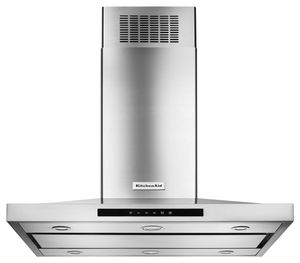
KitchenAid® 42'' Stainless Steel Island Mount Hood
Shop KitchenAid Island Range Hoods
When your cooktop is the centerpiece of an island, you need a hood with a large footprint and plenty of power. This 42-inch model provides an extra-wide capture area to account for cross-breezes in open rooms. The 600 CFM motor is paired with a perimeter suction system to ensure that smoke doesn't curl around the edges of the unit. It is finished beautifully on all sides, making it a high-end design statement. It also includes a glass-touch display that stays flush with stainless steel for a very modern look.
⭐Featured KitchenAid KVIB602DSS Review:
"We love the look this hood gives our kitchen. Hangs beautifully and very elegant. Works very well. I cook a lot, and this takes care of all the unwanted aroma. we love the sleek design. It’s an island hood, but doesn’t look bulky."
To learn even more about how to choose the right kitchen vent hood for your cooking setup, trust our experts at Liddiard Home Furnishings! We’re happy to help you explore top models and brands, including our top picks and more. Visit us today to learn more!
Learn More: Induction Cooktop Worthy
Frequently Asked Questions about Kitchen Vent Hoods
Ducted range hoods vent air directly outside through a pipe, while ductless models use filters to clean the air and release it back into the kitchen. Ducted systems are more effective at removing heat and moisture, whereas ductless units are easier to install in apartments or homes without existing vents.
You should aim for 1 CFM of ventilation for every 100 BTUs of total burner output on your gas stove. If your range has a total of 50,000 BTUs, you will need a hood with at least 500 CFM to safely clear the smoke and heat.
While a simple under-cabinet replacement can be a DIY project, we recommend professional installation for wall-mount, island, or high-CFM units that require new ductwork. Pros ensure the venting is airtight and the electrical connections are safe, which prevents fire hazards and moisture damage inside your walls.
The ideal height for a vent hood is between 24 and 30 inches above the cooking surface. If it is too low, it can become a fire risk or block your view, but if it is too high, the fan will not be able to capture the rising smoke and grease effectively.
Baffle filters are made of stainless steel or aluminum plates that force air to change direction, causing grease to drop onto the metal surface. They are better than mesh filters because they provide superior airflow even as they get dirty and are much easier to clean in a dishwasher.
If your range hood is rated for 400 CFM or higher, many local building codes require a make-up air system to replace the air being pulled out. This prevents negative pressure in your home, which could otherwise pull dangerous exhaust gases back in from your furnace or water heater.
Why Trust Liddiard Home Furnishings?
For over 65 years, Liddiard Home Furnishings has been providing Utah with premium home furnishings. This family-owned business has worked to deliver a better kind of shopping experience to the greater Salt Lake City area. Whether it’s the carefully laid out showroom or the outstanding customer service, when you shop at Liddiard’s, you’ll feel like family. The team at Liddiard has crafted a catalog full of incredible products made by brands with reputations for quality. Shop online or visit our showroom to discover what makes Liddiard Home Furnishings so unique.
Shop Kitchen Vent Hoods at Liddiard Home Furnishings
For the home furnishings you need, visit Liddiard Home Furnishings in Tooele, UT. You’ll find the best prices when you shop cooking appliances online. Check out Liddiard reviews, and if you have questions, our friendly product experts are always happy to keep you informed on the latest kitchen vent hoods— whether you call us at 435-882-0964 or use our online chat feature. Visit our Tooele showroom today!
Learn More: Electric Cooktop Shopping Guide